Welcome, Guest. Please login or register.

September 17, 2026, 02:54:31 AM

Login with username, password and session length

Shoutbox


Administrator

2025-08-16, 11:30:27
Welcome to forum  :)

Recent

Members
Stats
  • Total Posts: 16700
  • Total Topics: 16600
  • Online today: 226
  • Online ever: 4405
  • (August 05, 2026, 04:17:43 PM)
Users Online
Users: 0
Guests: 81
Total: 81

81 Guests, 0 Users

Recent Posts

Pages: 1 ... 4 5 [6] 7 8 ... 10
51
Crypto News Channel / Crypto industry turns to US regulators after CLARITY setback
« Last post by Administrator on September 16, 2026, 03:10:02 AM »
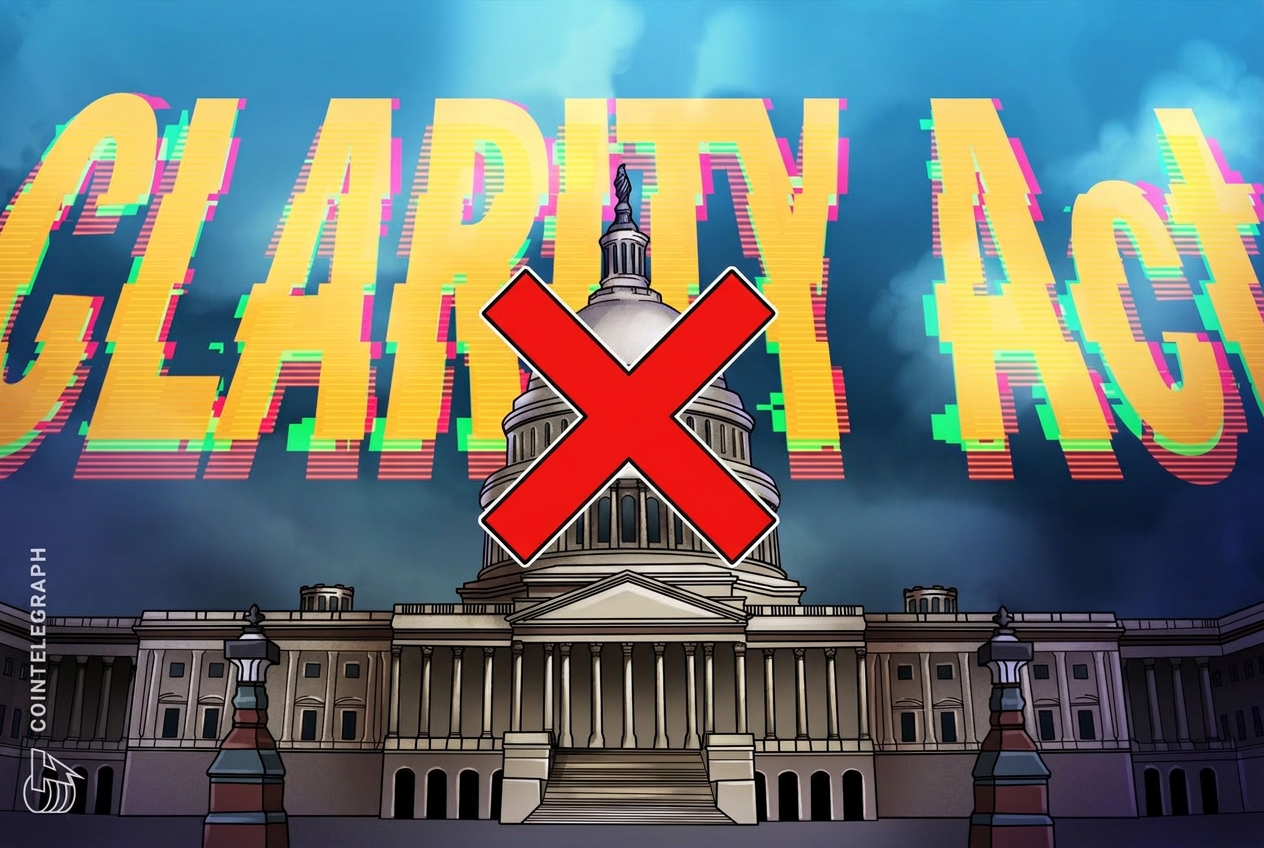
Crypto industry turns to US regulators after CLARITY setback

Crypto industry turns to US regulators after CLARITY setback

The CLARITY Act could still be revived after Senator Thom Tillis moved to reconsider the failed cloture vote, though industry executives are divided over whether Congress has enough time left.


Source: Crypto industry turns to US regulators after CLARITY setback
52
Why banks should stop worrying and learn to love the Clarity Act


Source: Why banks should stop worrying and learn to love the Clarity Act
53
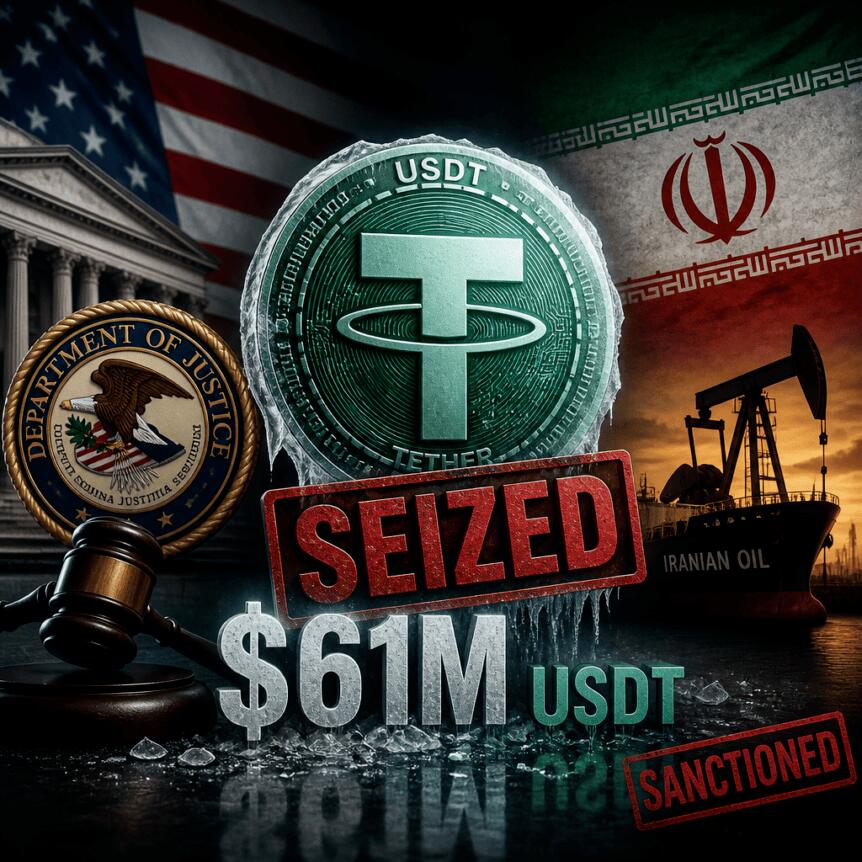
US moves to seize $61M USDT linked to sanctioned Iranian oil sales
Us Moves To Seize $61m Usdt Linked To Sanctioned Iranian Oil Sales

The U.S. Department of Justice is pursuing forfeiture of more than $61 million worth of Tether’s USDT, alleging the stablecoin proceeds were tied to black-market sales of sanctioned Iranian oil. The government’s civil forfeiture case contends that the crypto linked to these oil shipments was intended to support Iran’s government and military entities, including the Islamic Revolutionary Guard Corps (IRGC).


According to the DOJ filing, a network associated with two Hong Kong-incorporated entities—Blessed Trust and Hexa Whale—used Binance accounts to move proceeds from oil sold to buyers in China. The DOJ says related blockchain activity involved more than $1.5 billion in transfers, including movements toward businesses allegedly connected to IRGC-linked financial channels, cryptocurrency addresses, and an Iranian exchange.


Key takeaways


  • The DOJ seeks forfeiture of about $61.19 million in USDT tied to alleged Iranian oil proceeds and support for IRGC-linked activities.

  • The complaint points to Binance accounts used to route funds, while Binance says it did not allow transactions with sanctioned individuals and is cooperating with authorities.

  • Tether states it froze roughly 61.19 million USDT across 10 Tron addresses in 2025 under a process tied to a seizure warrant.

  • The filing adds to expanding U.S. sanctions pressure on Iran’s ability to use digital assets for oil-related payments.

  • Energy-market disruptions in the Middle East, including attacks impacting Saudi infrastructure and shipping routes, have contributed to higher oil prices alongside the legal crackdown.


DOJ civil forfeiture targets USDT connected to Iranian oil


In its Monday allegation, the DOJ said Blessed Trust and Hexa Whale used Binance accounts to handle funds derived from oil sales to buyers in China. The filing describes an ecosystem of related addresses that, according to the government, received and distributed more than $1.5 billion. It further claims some transfers were directed to entities tied to IRGC-linked money-transfer services, as well as crypto addresses and an Iranian exchange.


The DOJ’s action is framed as civil forfeiture, meaning the government seeks a court order to obtain permanent ownership of the assets if it convinces the court in its favor. The filing also notes that the allegations have not been proven in court.


Binance disputes claims and points to cooperation


A Binance spokesperson told Cointelegraph that the exchange does not permit transactions with sanctioned individuals. The spokesperson also said Binance was continuing to cooperate with law enforcement, including by investigating, restricting, or freezing accounts where appropriate.


Importantly, Binance indicated that the case was not filed against the exchange and did not claim wrongdoing by Binance itself.


Tether freezes USDT; how the seizure process is described


The court complaint says Tether froze approximately 61.19 million USDT across 10 addresses on the Tron network in 2025. The filing states that a seizure warrant would allow the FBI to take custody of the assets by requiring Tether to destroy the frozen tokens and issue replacements of equal value for transfer to an FBI-controlled hardware wallet.


Cointelegraph reached out to Tether for comment but had not received a response by publication. The DOJ’s complaint also specifies that the U.S. would gain permanent ownership only through a final forfeiture judgment issued by the court.


The Tether freeze matters for market participants because stablecoins are often used to move value quickly across jurisdictions. When a large issuer freezes tokens associated with a law-enforcement request, it signals that authorities are focusing on stablecoin rails—not just on exchanges or trading accounts—when tracing alleged sanctions evasion.


Broader U.S. sanctions pressure on Iran’s crypto-linked oil payments


The forfeiture case comes as Washington escalates financial pressure on Tehran, including through sanctions approaches aimed at the digital asset ecosystem.


Earlier this year, the U.S. Treasury expanded its Iran sanctions framework to cover the country’s digital asset sector, enabling U.S. authorities to target foreign individuals and companies operating in or supporting that sector. In connection with that expansion, the Treasury alleged that UAE-based broker Ivan Obukhov processed more than $100 million in crypto payments since 2023 to facilitate Iranian oil sales for the IRGC’s Quds Force.


Read together, these steps suggest a widening enforcement posture: rather than focusing solely on traditional banking channels, U.S. authorities are explicitly targeting how crypto might be used to receive, convert, and move value for oil-related transactions linked to sanctioned actors.


Oil market turbulence runs alongside the enforcement push


Separately from the legal developments, the geopolitical backdrop is continuing to disrupt energy flows. The ongoing conflict between the U.S., Israel, and Iran—which began in February—has affected oil shipments across the Middle East and contributed to price volatility.


Reuters reported on Tuesday that Saudi Arabia’s East-West pipeline remained offline after Friday attacks that Riyadh blamed on Iran-backed fighters in Iraq. Reuters also cited additional missile and drone attacks by Iran-backed Houthi forces on Saudi Arabia on Monday.


Market data at the time of publication showed Brent crude trading at about $107.59 per barrel, up 1.81%, while U.S. West Texas Intermediate was around $103.35 per barrel, up 1.93%, according to figures cited by Business Insider Markets.


While the DOJ case is about alleged financial routing around sanctioned oil, the parallel oil-price rise underscores how sanctions enforcement and conflict-driven supply disruptions are converging in real time—potentially increasing incentives for actors to seek alternative payment methods when traditional channels face tighter constraints.


For readers tracking this story, the next key variable is procedural: whether the forfeiture court rules in the government’s favor, and how both the alleged network and the stablecoin issuer’s freeze mechanism play out during litigation. As U.S. sanctions expand further into the digital asset sector, additional cases could follow that test how stablecoin issuers, compliance teams, and exchanges respond to law-enforcement requests tied to sanctioned trade.


This article was originally published as US moves to seize $61M USDT linked to sanctioned Iranian oil sales on Crypto Breaking News – your trusted source for crypto news, Bitcoin news, and blockchain updates.


Source: US moves to seize $61M USDT linked to sanctioned Iranian oil sales
54
Bitcoin Price Analysis: BTC Faces a Make-or-Break Week – What’s the Most Likely Scenario?

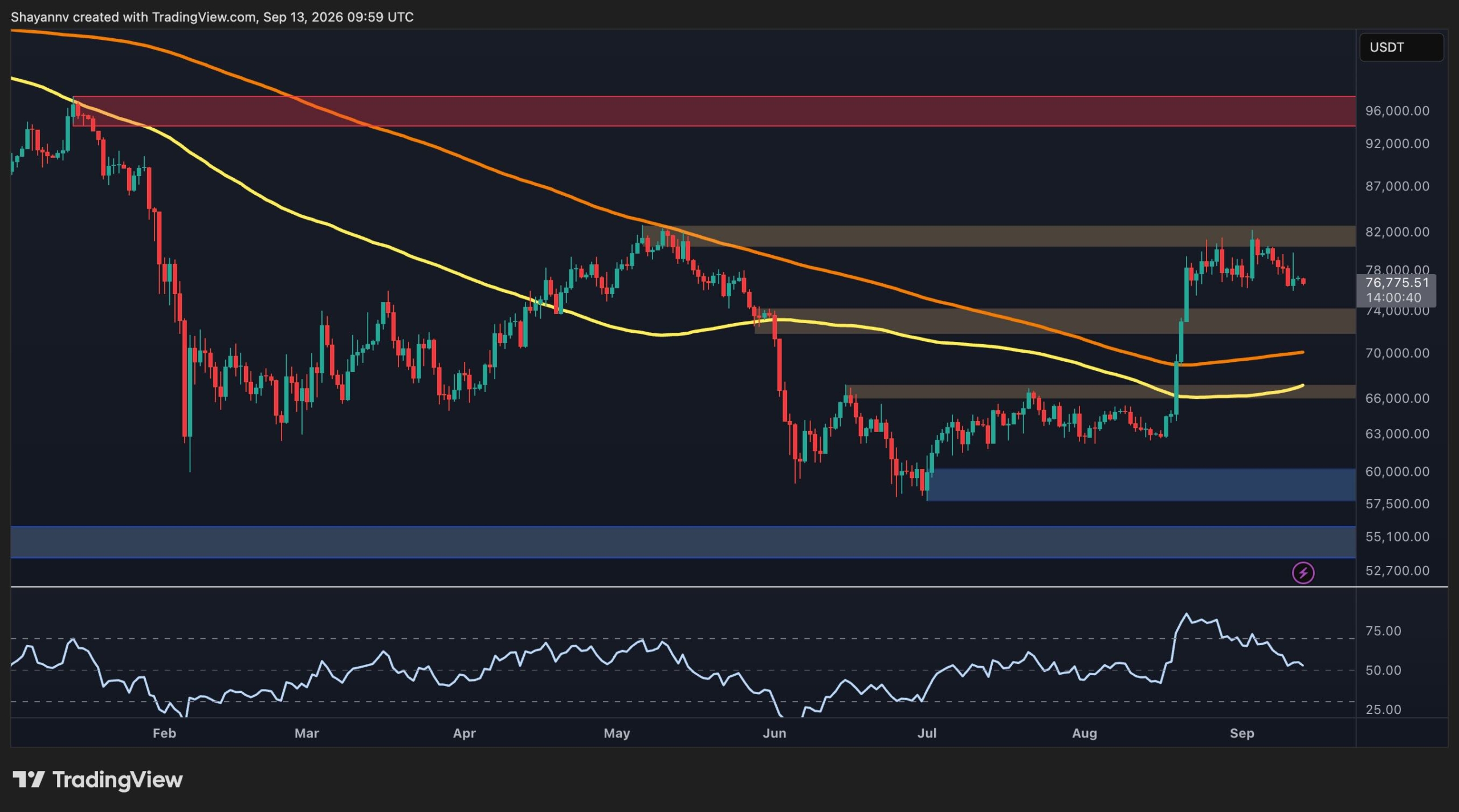
Bitcoin is consolidating around $77.3K after a powerful breakout from the $67K area. While the broader structure has improved significantly, BTC is now facing an important resistance cluster near $80K-$82K. Meanwhile, the latest Coinbase Premium reading suggests that US spot demand has yet to fully confirm the recent advance.


Bitcoin Price Analysis: The Daily Chart


The daily chart shows a significant structural recovery. After falling to the $60K demand zone in June, Bitcoin spent several months building a broad base before breaking decisively above the $67K resistance area in late August. The subsequent rally carried BTC rapidly through the $72K-$74K zone and toward the $80K area.


The $72K-$74K region has now become the first major support zone. A successful retest of this area would preserve the bullish structure established by the recent breakout. Below it, the $67K zone is a more important structural support, as it previously capped the market for several months. A deeper correction could bring the $60K demand zone back into focus.


On the upside, BTC is approaching the $80K-$82K resistance zone. The price has already tested this area several times but has failed to establish a sustained breakout above it. A daily close above $82K would therefore be significant, as it could open the way toward the $90K mark or even higher.


BTC/USDT 4-Hour Chart


The 4-hour chart provides a clearer view of the latest move. Bitcoin spent much of the summer trading sideways between roughly $60K and $67K before staging a sharp breakout. The move through the $67K resistance zone accelerated dramatically, taking BTC through $74K.


After reaching the $80K-$82K area, however, the rally has lost momentum. BTC is currently trading around $76.8K and has formed a relatively broad consolidation below resistance. This can be interpreted as a potential continuation range following the breakout, provided the lower boundary remains intact.


The immediate support is located around the same daily $72K-$74K zone. This area is particularly important because it represents the previous resistance zone that BTC cleared during the breakout. Holding it would maintain the sequence of higher highs and higher lows on the 4-hour timeframe.


The main resistance remains $80K-$82K. A clean breakout and sustained trading above this zone would signal that buyers are regaining control and could bring the next major daily resistance around $95K into consideration. Conversely, repeated rejection followed by a break below $72K could trigger a deeper retracement toward $67K.


On-Chain Analysis


The Coinbase Premium Index provides an important caveat to the technical picture. The metric measures the price difference between Bitcoin on Coinbase and other major exchanges and is commonly used as a proxy for US-based spot buying pressure. Positive readings generally indicate stronger demand on Coinbase, while negative readings suggest comparatively weaker US spot demand.


The latest reading on the chart is around -0.02, with the index back in negative territory. This is notable because BTC has simultaneously remained well above the levels seen before the late-August breakout.


The divergence suggests that the recent price strength has not been accompanied by a sustained surge in Coinbase buying pressure. In other words, while the technical structure has improved, the latest premium data does not yet provide strong confirmation of aggressive US spot accumulation.


Historically, within the period shown, the Coinbase Premium spent considerable time below zero during BTC’s decline toward the $60K area, while stronger positive readings appeared during several recovery phases. The current negative reading, therefore, warrants some caution as Bitcoin approaches the $80K-$82K resistance zone.


For the bullish scenario to strengthen, a renewed move of the Coinbase Premium into positive territory alongside a breakout above $82K would provide more convincing confirmation. If BTC instead loses $72K while the premium remains negative, it would increase the probability that the recent rally is undergoing a deeper correction rather than immediately transitioning into another leg higher.


The post Bitcoin Price Analysis: BTC Faces a Make-or-Break Week – What’s the Most Likely Scenario? appeared first on CryptoPotato.


Source: Bitcoin Price Analysis: BTC Faces a Make-or-Break Week – What’s the Most Likely Scenario?
55
Velocity extends Series A to $48M at $200M valuation with backing from Visa, Circle, and Ripple


Source: Velocity extends Series A to $48M at $200M valuation with backing from Visa, Circle, and Ripple
56
BIS paper finds major gap in Bitcoin onchain transfer estimates

BIS paper finds major gap in Bitcoin onchain transfer estimates

A BIS study found widely used crypto metrics can obscure economic activity, with measurement challenges spanning Bitcoin, Ethereum and stablecoins.


Source: BIS paper finds major gap in Bitcoin onchain transfer estimates
57
Bitcoin gives back Monday's gain as Clarity Act odds fade on Polymarket


Source: Bitcoin gives back Monday's gain as Clarity Act odds fade on Polymarket
58
Crypto stocks slide after CLARITY Act fails to advance in Senate

Crypto stocks slide after CLARITY Act fails to advance in Senate

Circle and Coinbase shares fell about 10% as the failed Senate vote weighed on crypto-linked equities, with Bitcoin miners and treasury companies also declining.


Source: Crypto stocks slide after CLARITY Act fails to advance in Senate
59
How a simple coding mistake let a hacker drain $7.8 million from a crypto wallet


Source: How a simple coding mistake let a hacker drain $7.8 million from a crypto wallet
60
Crypto News Channel / US Senate fails to advance CLARITY Act
« Last post by Administrator on September 15, 2026, 10:38:58 PM »
US Senate fails to advance CLARITY Act

US Senate fails to advance CLARITY Act

The failed procedural vote leaves the CLARITY Act facing an uncertain future after months of negotiations over crypto oversight and ethics provisions.


Source: US Senate fails to advance CLARITY Act
Pages: 1 ... 4 5 [6] 7 8 ... 10