Post by: Administrator on September 04, 2026, 08:23:03 PM
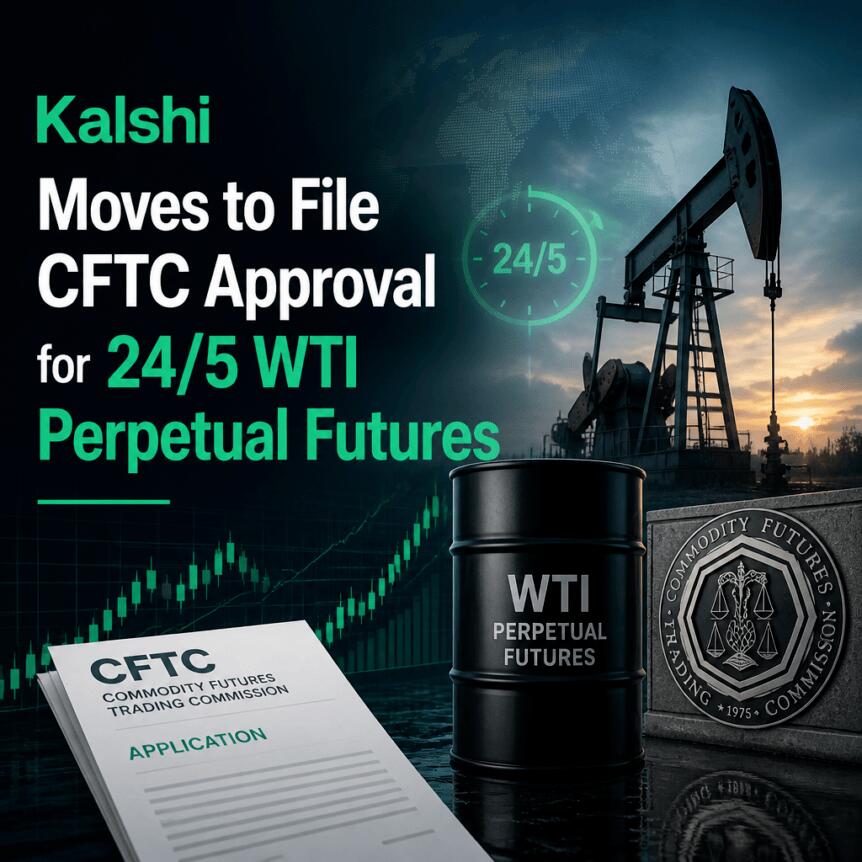
Kalshi, the prediction-market platform, is reportedly looking to expand into energy derivatives with a West Texas Intermediate (WTI) crude oil perpetual futures contract that would never expire—potentially positioning it as the first oil-linked “perps” product to trade on a regulated US venue.
According to a person familiar with the matter cited by Bloomberg, Kalshi could file the product with the Commodity Futures Trading Commission (CFTC) as soon as next week. Reuters reports the contract would trade 24 hours a day, five days a week. Cointelegraph has reached out to Kalshi for comment.
Key takeaways
- Kalshi reportedly plans to file a WTI crude oil perpetual futures contract with the CFTC that would have no expiration date.
- If approved, it would be the first oil-linked perpetual futures product to trade on a regulated US exchange environment.
- The proposal would support near-continuous trading (24/5), reflecting ongoing regulatory debate over 24/7-style market structure.
- Kalshi’s derivatives push comes amid separate legal fights over how federal commodities rules interact with state gambling enforcement.
Why “perpetual” crude oil futures would matter
Perpetual futures—commonly shortened to “perps”—are derivatives that do not carry an expiration date. In practical terms, that structure can allow traders to hold positions indefinitely rather than rolling exposure into new contracts as maturity approaches.
If Kalshi’s WTI perpetual is approved, traders would gain a regulated venue for long-duration exposure to crude oil-linked price movements without the operational friction of frequent contract rollovers. The reported 24 hours a day, five days a week schedule would also reduce downtime relative to traditional futures market hours, which investors often cite as a key drawback for strategies that depend on continuous monitoring.
CFTC moves toward 24/7 and energy-linked perps
The report lands in the middle of an active regulatory review. In June, the CFTC sought public comments on extending standard futures contracts to 24/7 trading and on permitting perpetual contracts tied to physically delivered or storable energy commodities, including crude oil.
Those efforts have already produced friction. In July, the CFTC halted the self-certified listing of a CME Group contract intended to introduce 24/7 crude oil futures trading. The regulator said it was examining whether the product complied with federal commodities law.
Kalshi’s reported filing would place a new bet on the same broader agenda: how to structure continuously operating derivatives markets under existing commodities regulations. Should the CFTC approve a perpetual format for a storable, physically linked commodity like crude, it could effectively widen the set of instruments available to US traders while also testing the regulator’s willingness to treat perps as compatible with current statutory frameworks.
Regulatory spillover: other perpetual products and “onshore” arguments
Interest in perpetual derivatives is not limited to energy. Earlier coverage noted that Ondo Finance submitted comment letters to the SEC and CFTC on Aug. 24 urging regulators to bring stock-linked perpetual futures “onshore.” In those letters, Ondo argued that perpetual contracts tied to individual stocks could operate within the existing security futures framework without requiring entirely new rules.
While Kalshi’s proposal is specific to WTI crude oil rather than equities, the parallel underscores a common industry theme: market operators are pressing for clearer pathways to list perpetual derivatives in regulated markets rather than leaving them to offshore arrangements or fragmented venues.
Kalshi faces jurisdiction questions beyond derivatives design
Kalshi’s expansion into oil-linked perps also intersects with a different, ongoing dispute over jurisdiction and enforcement. The company’s prediction-market business has been dealing with questions about whether federal commodities law preempts state-level gambling enforcement against event contracts traded on CFTC-regulated exchanges.
On Tuesday, a Michigan state court issued a preliminary injunction barring Kalshi from offering sports-related event contracts in the state and ordered it to maintain geofencing that blocks Michigan residents. The legal battle continues at the federal level as well.
On Wednesday, New Jersey asked the US Supreme Court to address the jurisdictional dispute after federal appeals courts issued conflicting decisions in cases involving New Jersey and Nevada, Reuters reported.
Taken together, the filings described by Bloomberg and Reuters highlight two tracks of Kalshi’s current challenge: first, convincing regulators that new derivative structures—like perpetual oil-linked contracts and 24/5 trading—fit within commodities law; and second, navigating how state gambling restrictions apply when contracts are offered on CFTC-regulated platforms.
What to watch next
If Kalshi submits the WTI perpetual proposal as early as next week, the key question will be how the CFTC evaluates compliance for (1) a no-expiration perpetual structure tied to a storable energy commodity and (2) the market-hours approach for near-continuous trading. Traders and builders should watch the regulator’s response closely, since approval could set an important precedent for other energy-linked perps—while the outcome of Kalshi’s jurisdictional litigation could shape how far its broader prediction-market model can expand in the US.
This article was originally published as Kalshi Moves to File CFTC Approval for 24/5 WTI Perpetual Futures on Crypto Breaking News – your trusted source for crypto news, Bitcoin news, and blockchain updates.
Source: Kalshi Moves to File CFTC Approval for 24/5 WTI Perpetual Futures (https://www.cryptobreaking.com/kalshi-moves-to-file-cftc/)